
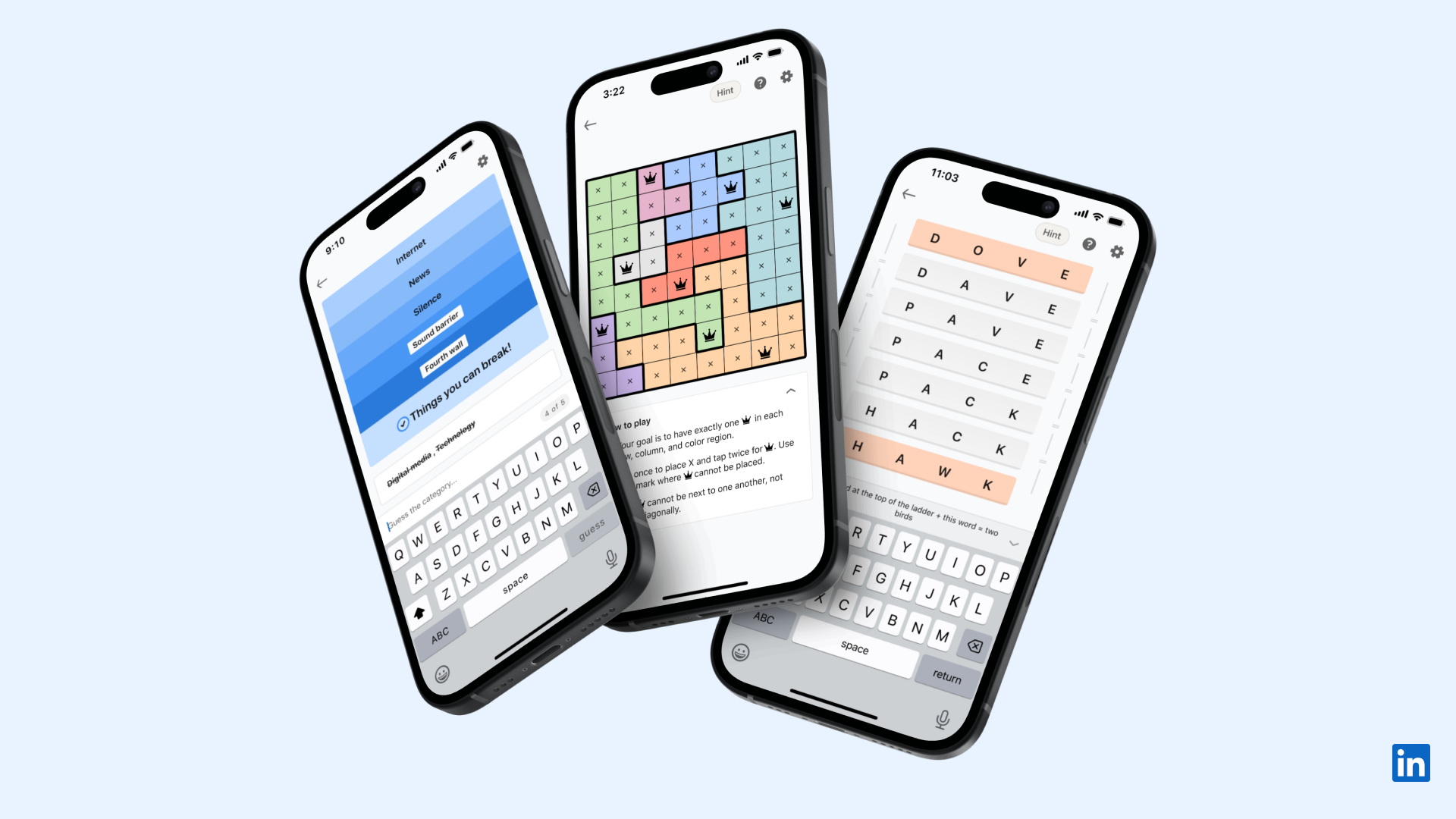
Let’s face it—some mornings it’s hard to shift from sleeping to sitting at a desk ready to work. Our bodies aren’t the only things that need a warm-up. Our brains do too.
Athletes stretch before a workout, musicians practice scales before a performance, and I’ve found one surprisingly fun way to wake up my brain each morning: LinkedIn’s daily games.
Located on the side of your profile page, the LinkedIn daily games are comprised of 8 strategic games to help stir the mind and challenge yourself to think outside of the box. Each game has its own focus and skillsets so that there is a game for everyone. Each game is timed so that you can compete with LinkedIn connections and push yourself to achieve new goals. But don’t worry, for those days where you’re looking to take it slow, or your brain may not be awake just yet, there are hints and tools available to help you find success in each game.
Below is a ranking of all the LinkedIn daily games options from best to worst in my personal opinion.
- Wend
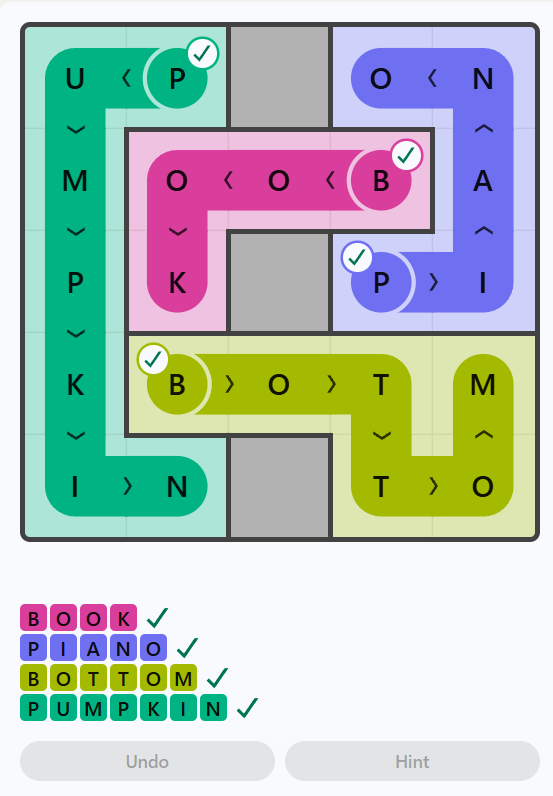
New to the LinkedIn daily game family, Wend is the option for players who loved word searches growing up. The objective is to find 4 hidden words ranging from four to seven letters long. Tiles listed can only be used once and no word can be spelled in a diagonal fashion. This puzzle color codes solutions to provide a bright and encouraging result once words are found, and is a great starter puzzle to get your brain charged for the day.
- Zip
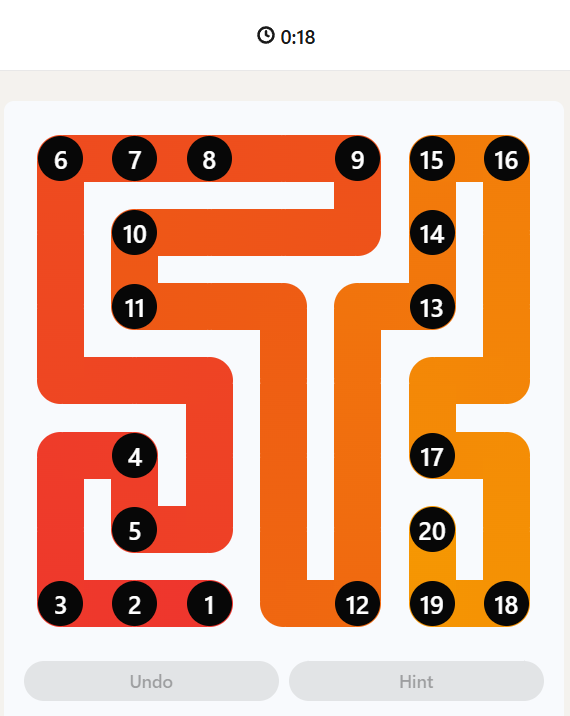
Similar to the classic cellphone game Snake, the goal of this game is to grow your line by connecting numbered dots in order with as little back tracking as possible and absolutely no overlap. With Zip, it’s all about anticipating where your line will go next to ensure you get the fastest time. This game takes coordination, forward thinking and speed which helps in sharpening your senses for the day.
- Pinpoint
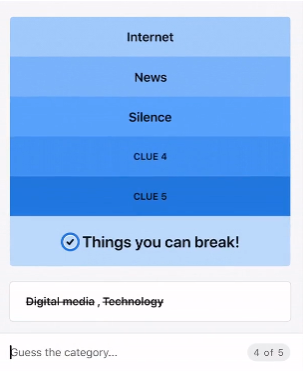
The goal of Pinpoint is to guess a category using 5 hidden clues in as little turns as possible. This game really pushes the limit of deductive reasoning and word connections. The first clue is always the hardest and then gets progressively more obvious of what the category is as each clue is uncovered.
For example, are you able to connect the words: Lunch, Sand, Mail, Safe Deposit and “Think outside the “?
If you guessed: words that come before “box”, then you’re correct! This game is not only a brain teaser, but also is a fun way to learn about unfamiliar categories and words.
- Crossclimb
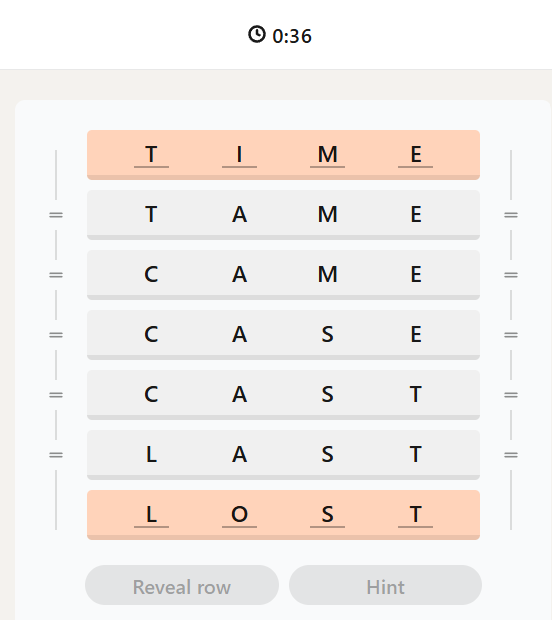
For those who love word ladders, Crossclimb is the LinkedIn daily game for you. To play, you’ll need to guess the answer to 5 clues and then reorder the rows to create a word ladder. A word ladder is a list of words each word differs by one letter to create a sequence. Once the word ladder is complete, then two additional clues are unlocked at the top and bottom for a final solve. Hints are allowed, and rows can even be revealed for those truly stuck on a word; however, there is a timer associated with each hint and reveal to deter players from taking advantage of the system and allowing time to try on their own.
- Mini Sudoku
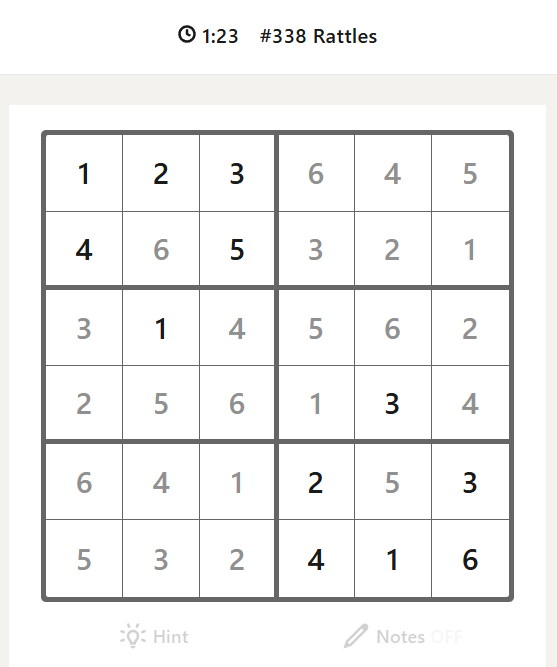
This game is self-explanatory – it’s Sudoku on a smaller scale! Each day has a different theme or difficulty and it’s up to the player to complete the puzzle by inserting numbers into the empty cells until each row, column and region contains the numbers 1- 6 with no repetition. This LinkedIn daily game is certainly one of the more classic brain games, but still offers a fun experience with plenty of twists and turns to keep cognitive thinking high.
- Patches
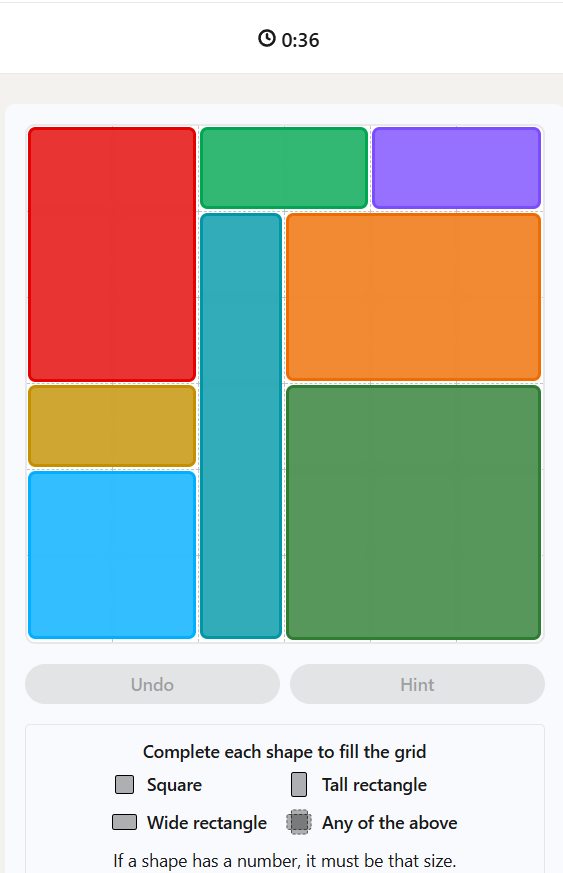
If you love a good jigsaw puzzle, then Patches will quickly rise to your number one LinkedIn daily game. Notated by different shape options and numbers of spaces, Patches is the perfect game for those who enjoy color, have high spatial awareness and enjoy thinking a few moves ahead at a time. This game is quick, strategic and satisfying once completed.
- Queens
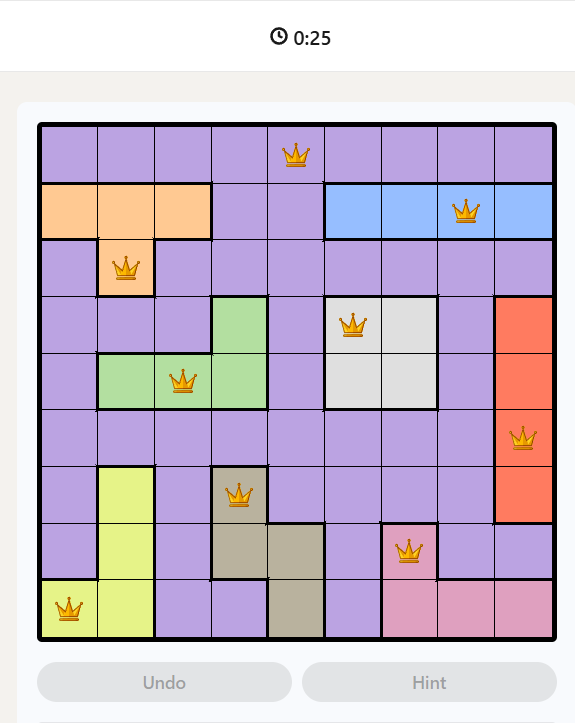
Queens is a visual logic puzzle where the goal is to place one queen crown in each row, column and color region without touching and overlap. Two crowns cannot be next to each other, even diagonally and to some players requires a lot of trial and error to find the solution. Luckily for players there are several tools at their disposal to help in solving the puzzle. Players are able to undo moves, ask for hints and even mark unused boxes with an “x” to signify a space that can’t work and helps narrow down where to place the queen crowns. Queens is in my opinion one of the more involved games of the LinkedIn Daily games, but when solved comes with the most satisfaction and pride.
- Tango
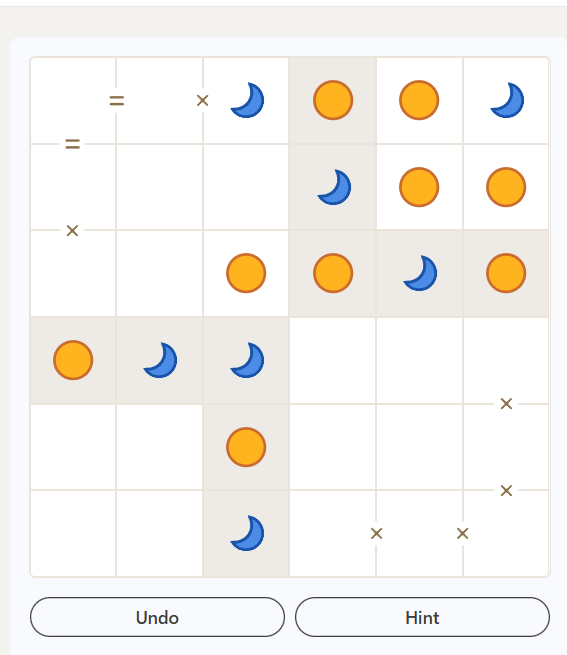
The final game on the list is Tango, which is a deduction game all about balance. You are provided a grid with suns and moons and each symbol has distinct rules for how they can be placed on the board. Each row and column must contain the same number of suns and moons and players need to be aware of cells that require having the same symbols as others, or different. Hints are available, and the grid itself will display red lines over cells to signify when a symbol is in the wrong place. In true honesty, this game does not work with my personal skillsets, and is usually left unplayed. But for those that enjoy the challenge and want the final push to awaken their brain, Tango is the game to do it!
While these games won’t replace a good night’s sleep or your morning coffee, they encourage problem-solving, pattern recognition, and critical thinking before diving into emails and meetings.
With new puzzles posted each day, the LinkedIn games will provide you with a fun way to jump start your mind and start your day in a fun and focused way. Give them a try, and discover which games are your favorite to add to your morning routine!
No responses yet