
The Colosseum. The Roman Forum. The Trevi Fountain.
They’re some of Rome’s most iconic attractions—and for good reason. But if you’ve already checked those landmarks off your list, or simply want to experience ancient Rome without navigating shoulder-to-shoulder crowds, there’s another destination that’s just as incredible.
Ostia Antica.
What is Ostia Antica?
Located about 40 minutes by train, southwest of Rome, Ostia Antica was once the bustling sea port of ancient Rome.
The name comes from the Latin word “Ostium” which translates to “mouth of a river” as it was built at the mouth of the Tiber river in 620 B.C. and is said to have had over 100,000 residents to call it home. Ostia Antica was considered a commercial port city, full of tradesmen and shops selling their wares for the capital and offered a diverse way of living.
Over time the port town became abandoned as residents moved to other cities, like Porto, as navigation of the Tiber river was not safe due to being covered in mud, changes in water level and shifting coastlines.
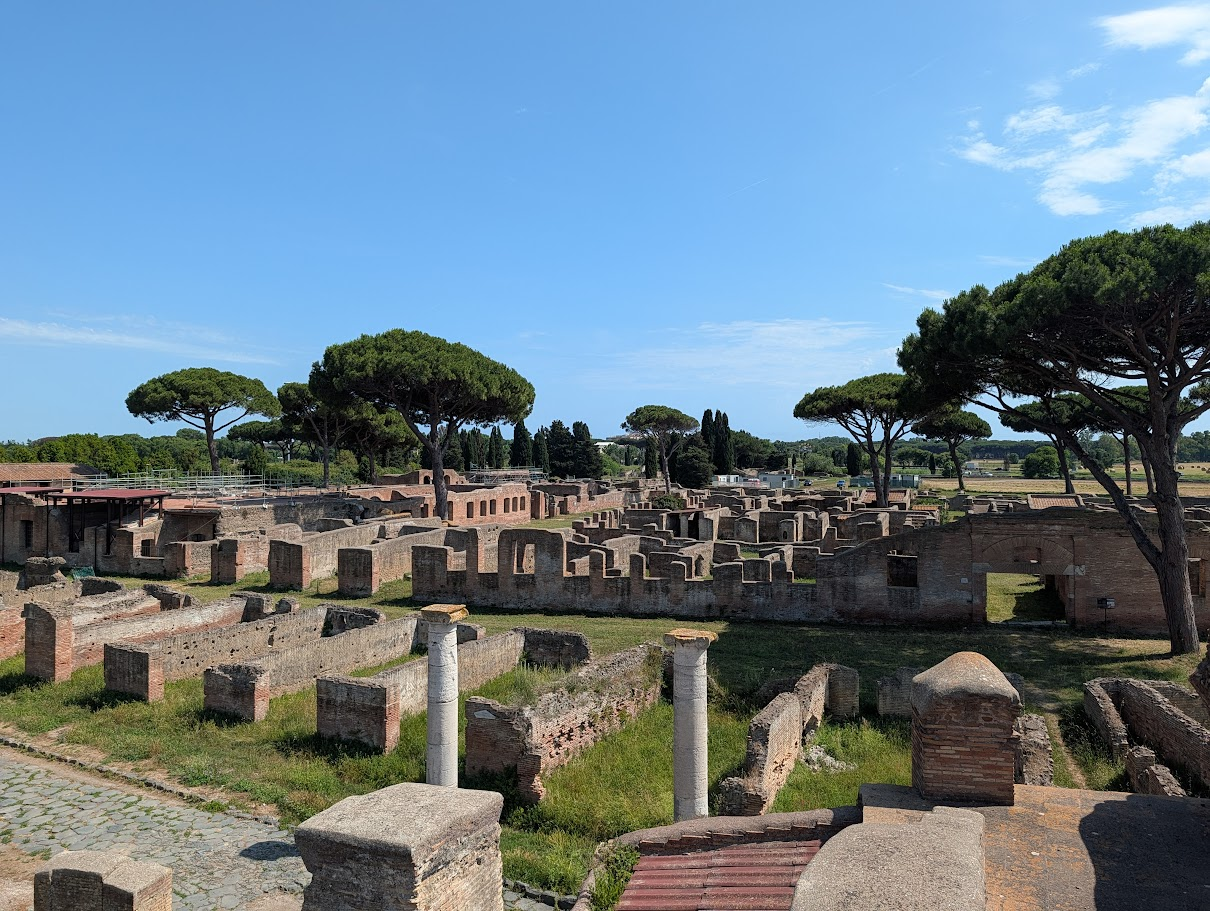
Today, it is one of the best preserved Roman cities in the world. Whereas other archeological parks in Italy, like Pompeii, experienced destruction, Ostia Antica is a well-preserved gem to get an experience of what daily life was like for the people who lived and worked there. This spot is fantastic for history lovers, photographers and offers far fewer crowds than other Roman attractions.
What You’ll See
When entering the streets of Ostia Antica, you will instantly feel like you are being transported back to ancient times as you begin to wander the cobblestone streets taking in the rows of red brick ruins. Exploring this historic place helps you envision the grandness that this city once offered to the Roman people and what life was like.
Here are some of the most popular spots to visit due to their preservation and importance to those who lived in Ostia Antica:
- The Amphitheater: Located towards the front of the city, you can climb the stairs of one of Rome’s earliest amphitheaters. Here, close to 2,500 – 4,000 spectators were able to attend concerts by local and traveling musicians, watch plays, and even witness aquatic displays. The amphitheater was originally facing the Tiber river, offering a beautiful backdrop for several performances. Today, the amphitheater flanks a beautiful garden where guests can stroll to admire ancient statues and merchant stands. To this day, live productions are still hosted in this amphitheater, and information on event schedules and ticketing can be found on the official Parco Archeologico di Ostia Antica website.
- Roman Baths: Ostia Antica has an extensive roman bath facility. Here, citizens would come to socialize and enjoy the facilities amenities including steam baths and large pools for relaxation. While roaming through the various rooms, you will see the remnants of the plumbing systems that allowed these baths to operate, intact mosaic tiling that decorated the floors and walls and experience the grandeur of this once high-traffic area.
- Merchant Stores: As Ostia Antica was known as a commercial town full of tradesmen, there is no shortage of proof of what services were offered in this bustling seaside town. Mosaics showing fish and baskets show where fishermen would sell their fish. Giant mortars show where grain was ground into flour to bake bread in stone ovens that still stand to this day. As you make your way throughout the city, be sure to keep an eye out for all the details and clues as to what these stores sold.
- The Thermopolium: Known more commonly as a tavern, the Thermopolium is a preserved wine bar and inn where citizens and visitors of Ostia Antica would gather to enjoy food and drinks. You can step behind the bar of the tavern and imagine what it would be like to serve guests drinks and food overlooking the tables, fireplaces and artwork which is still visible to this day.
- The Capitolium: Located in the center of the city, the Capitolium was the city temple dedicated to Roman deities: Jupiter, Juno and Minerva. This structure was also used for hosting the visitation of emperors and high officials. The forum is home to a large staircase leading to the temple and several stately columns to provide scale to the grandness of this once marbled structure.
Beyond these highlights, there are several other landmarks, scenic viewpoints and hidden details to see, you just need to know how to look!
How to tour Ostia Antica
It is recommended to allow 2-3 hours to take in all Ostia Antica has to offer. Leave yourself room in your schedule for the commute and to experience all the city has to offer.
For those that wish to choose their own adventure on how to navigate the city, throughout the archeological park there are signs that offer information regarding how citizens lived, key landmarks and renderings of what those landmarks would have looked like during their time. There are also signs that show maps located throughout the city which will help you navigate to key structures and stay aware of your location.
For those that prefer an experience that is more in the form of a structured tour, there are daily tours that can be booked from touring companies like Viator, City Wonders, Booking.com and Airbnb Experiences. Note that these tours are subject to the cost posted on the tour companies website which may include transportation, entrance tickets and more.
If looking for a free tour guide experience, download the Rick Stevens Audio Europe app wherever you buy phone apps and enjoy his free tour of Ostia Antica which provides directions to the different landmarks, a comprehensive history of the sites and offers whimsical commentary. This is a great option for keeping some structure to your self-guided tour, but still providing the flexibility to explore as you wish and take the time you need.
It is also recommended to visit the onsite museum which houses several incredibly well-preserved sculptures, mosaics and pieces of pottery from archeological digs which is included in the price of your ticket to the grounds.
Final Tips for Visiting Ostia Antica
A few tips to keep in mind for a comfortable visit to Ostia Antica:
- Wear supportive shoes: The city is large which comes with a lot of walking, so help your feet by wearing shoes that can handle long walks, cobble stone streets and provide all day comfort.
- Watch your step: Much of the park consists of uneven cobblestones, stairs, grassy pathways and more, so those with mobility concerns should plan accordingly.
- Bring water and sun protection: Although there are trees and structures to provide shade throughout the park, depending on the time of year of your visit conditions may be very warm. Bring water to stay hydrated and be sure to wear sun protection in the form of sunscreen or a hat.
- Enjoy lunch on site: At the back of the park, behind the museum, there is a cafe where you can grab a quick bite to eat to keep you fueled for your exploration. The cafe offers a large selection of sandwiches and hot plates as well as snacks, drinks and even frozen desserts.
- Grab a souvenir: Next to the cafe, there is a gift shop where visitors can shop for fun souvenirs to remember their experience by. From trinkets like magnets and post cards to T-shirts and hats, there are several options for purchase to remind you of your visit.
How to Get to Ostia Antica
Getting to Ostia Antica is simple. Take the Metro B line toward Laurentina, transfer to the Roma–Lido train at Piramide Station, and exit at Ostia Antica Station. From there, it’s about a 10-minute walk to the archaeological park.
The park can also offer parking for those with access to their own motor vehicle.
Ticket Pricing
Tickets can be purchased either online on Ostia Antica Parco Archeologico website, or the at the entrance to the archeological park. TIckets are priced at € 18 and includes access to all the sites and museums within the park.
Audio guides are also available for purchase.
Refer to the website for information on hours of operation and closures ahead of your visit.
While millions of visitors flock to Rome’s famous landmarks every year, relatively few make the short journey to Ostia Antica. That’s part of what makes it so special. Instead of viewing ancient Rome from behind barriers or crowded walkways, you can wander its streets, step inside its homes and shops, and imagine everyday life as it was nearly two thousand years ago. If you’re looking for one unforgettable day trip from Rome, Ostia Antica deserves a place at the top of your itinerary.
Comments are closed